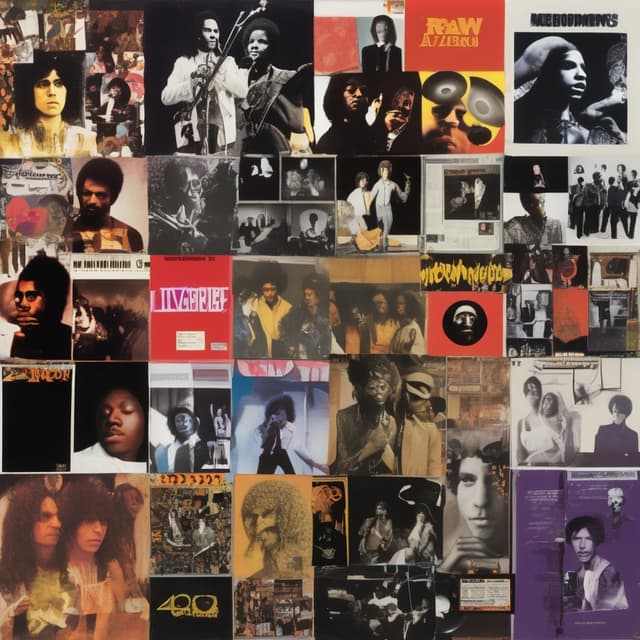
| Era | Late 1960s to 1970s |
| Genre | Krautrock • Industrial • Punk |
| Influences | Cultural upheaval • Political themes • Unconventional sounds |
| Reaction to | Commercialization and homogenization of mainstream pop music |
| Key features | Uncompromising artistic expression • Experimental and abrasive sounds • Lasting impact on popular music evolution |
In the latter half of the 20th century, popular music underwent a dramatic transformation driven by a backlash against the increasing commercialization and homogenization of the industry. While the 1950s had seen the rise of rock and roll and other youth-oriented musical styles, by the early 1960s much of this music had become corporatized and standardized. A new generation of artists and listeners began to push back, embracing uncompromising artistic expression, political themes, and unconventional sounds.
The seeds of this anti-commercial sentiment were sown in the late 1950s, as the meteoric rise of rock and roll led to a swift corporate takeover of the genre. Record labels, radio stations, and mainstream media sought to package and market rock stars into easily digestible, family-friendly products. The raw, rebellious energy of artists like Elvis Presley, Little Richard, and Chuck Berry was increasingly diluted.
Frustrated musicians and fans began to seek out alternative, underground music scenes that pushed against these commercial constraints. In New York City, the folk music revival of the late 1950s laid the groundwork, with artists like Bob Dylan and Joan Baez incorporating social and political commentary into their work. Similarly, the beatniks and jazz artists of San Francisco's North Beach area championed unconventional, improvisational styles.
As the 1960s progressed, these pockets of anti-commercial sentiment coalesced into robust music scenes across the Western world. In Germany, the Krautrock movement combined elements of psychedelic rock, electronic music, and avant-garde composition, exemplified by bands like Kraftwerk, Can, and Tangerine Dream. Italy saw the rise of the Italian prog rock scene, which fused together classical music, jazz, and heavy distortion.
Perhaps the most influential locus was the counterculture of the San Francisco Bay Area, where artists like The Grateful Dead, Jefferson Airplane, and Janis Joplin created a potent blend of psychedelia, folk, and hard-edged rock. This San Francisco sound, with its anti-establishment lyrics and improvisational spirit, would go on to inspire countless subsequent underground and alternative bands.
What unified these disparate experimental music scenes was a shared rejection of the prevailing pop music industry. Artists consciously sought to distance themselves from the slick, formulaic hits dominating the commercial charts. Instead, they embraced a more uncompromising, provocative, and often politically-charged artistic vision.
Lyrics moved away from simplistic love songs and teenage fantasies, delving into sociopolitical commentary, philosophical introspection, and even confrontational aggression. Musical structures became more complex and avant-garde, incorporating elements of atonal music, musique concrète, and free jazz. Album artwork, stage shows, and even artist personas projected an image of rebellion, subversion, and cultural upheaval.
As the 1960s gave way to the 1970s, this anti-commercial ethos continued to evolve and radicalize. In London, the punk rock scene emerged, championed by bands like The Sex Pistols, The Clash, and The Damned. Punk rock was defined by its raw, aggressive sonic attack, DIY ethic, and overtly political lyrics that lambasted the established order.
Meanwhile, in the industrial heartlands of UK and Europe, a new genre rose up that channeled the mechanized, dehumanizing aspects of modern society. Pioneering industrial acts like Throbbing Gristle, Cabaret Voltaire, and Einstürzende Neubauten created abrasive, unsettling soundscapes using found objects, synthesizers, and tape manipulation.
The legacy of this anti-commercial musical movement cannot be overstated. While it may have remained underground and marginalized during its heyday, it fundamentally reshaped the boundaries and possibilities of popular music. The experimentalism, social consciousness, and do-it-yourself ethos of krautrock, punk, and industrial would go on to influence countless subsequent genres, from alternative rock to electronic dance music to heavy metal.
Moreover, this music helped catalyze broader cultural and political changes, galvanizing youth movements, countercultures, and social protests across the Western world. The confrontational stance of these artists challenged the status quo and carved out new spaces for uncompromising artistic expression outside the commercial mainstream. In this way, the rise of anti-commercial music in the late 1960s and 1970s represented a pivotal turning point in the evolution of popular culture.
